
The Gyms That Will Win Aren’t Just the Biggest, They’re the Most Connected
- By Patrick Vincler

Patrick Vincler
What You’ll Learn
In the next ten minutes, you’ll see your gym’s tech stack (and the gap it’s leaving) in a completely different light.
- Why underutilizing your backbone system is a complexity and capacity problem, not a laziness problem, and why that distinction matters.
- How a new class of integration tools turns a check-in timestamp into a behavioral portrait of every member.
- The two integration themes reshaping lifecycle marketing for climbing gyms, and exactly which platforms are leading each one.
- Why the mobile gap is a retention strategy hiding in plain sight.
- And the honest truth: why the gyms that win won’t just have the best tools, they’ll have the focus, or the right partner, to actually use them

Inside the 2026 CWA Summit: The Marketing Technology Landscape for Climbing Gyms
The indoor climbing industry is in a rare moment. Membership is growing. New gyms are opening. The culture around climbing has never been more energized. And yet, for most gym owners, the digital relationship with their members still looks a lot like it did a decade ago: a check-in, a billing transaction, maybe an occasional email. The surface has barely been scratched.

The Integration Gap: A Young Ecosystem Still Finding Its Wiring
Beyond the backbone, a set of third-party tools has emerged to go deeper in areas that management platforms can’t fully prioritize. Two themes are taking shape – and both carry real promise. But they come with a significant caveat: formal integrations between these tools and backbone systems are the exception, not yet the rule.
The ecosystem is young, and most vendors are still working out where partnerships rank on their priority list. The result: data lives in silos.
A climber’s activity in one platform rarely flows automatically into another – and without that connectivity, the full picture of who your members are stays frustratingly out of reach.
Theme 1: Rich Activity Data – Knowing Your Climbers Beyond the Check-In
Check-ins tell you someone showed up. What the most promising integration tools are building is a picture of what they did when they got there. That changes everything.
Platforms like Griptonite and Kaya, along with community-engagement tool ClimbTime, are creating member profiles that go well beyond a visit timestamp.
Griptonite uses RFID tags on routes to capture what grades a climber is attempting, what they’re sending, where they’re progressing and where they’re stuck. Kaya bridges outdoor and indoor climbing identity, bringing a climber’s project list, ascent history, and community connections into the gym context. ClimbTime builds community and competitive engagement through leagues, partner-finding, and in-app interaction – generating behavioral signals that tell you how invested a member actually is in your gym.
It echos what we shared in last month’s article, that this kind of data is the difference between sending a message and sending the right message. A climber who just sent their first V6 is in a completely different emotional place than one who hasn’t been in three weeks. Both deserve a different communication. Without activity data, you can’t tell them apart.
This is also a retention story. The research on membership-based businesses is consistent: personalized, timely communication that reflects what a member actually cares about is one of the most powerful tools for keeping them.
For climbing gyms, where the passion for the sport runs deep and the community connection is a core part of the value proposition, getting this right has outsized impact.
Ready to send the right message?
Tell us about your gym – we’ll show you exactly how activity data changes your member communication.
The gap today is that most of these tools are not yet formally integrated with backbone systems. The data richness exists – it’s just not yet flowing where it needs to go. Gym owners evaluating these platforms should be asking direct questions about integration roadmaps and API availability.
The Mobile Gap: Your Gym Should Live in Members’ Pockets
One more gap worth naming: most backbone systems don’t offer a dedicated member-facing mobile app, and the industry is behind on this.

Today’s consumer manages their entire relationship with a business through their phone. Membership management, class reservations, payment updates, community connection – every point of friction in those interactions is a small erosion of the member experience, and a missed opportunity to deepen engagement.
Among backbone systems, BETA stands out for having built a native member app into its core product. Kaya, Griptonite, and ClimbTime fill parts of this gap from the integration layer. But the experience remains fragmented – a member might use one app to book a class and another to log their climbs, with no unified identity connecting them.
The gyms that get to a single, unified mobile experience – membership, community, and activity data in one place – will have a loyalty advantage that compounds over time. This is not a feature request. It’s a retention strategy.
Theme 2: Engagement Orchestration – Acting on What You Know
Data without action is just storage. The second integration theme is about building the marketing layer that turns member signals into timely, relevant communication,across the channels where members are actually reachable.
Patch is the most relevant player in this space for climbing gyms right now. Their platform combines SMS and email marketing, automated customer journeys, loyalty programs, referral automation, and review generation – purpose-built for the kind of lifecycle marketing that membership businesses need.
Two things make them worth attention specifically: SMS, a channel most backbone systems don’t offer natively, remains one of the highest-engagement communication channels available, especially for time-sensitive moments. And Patch‘s interface is purpose-built for marketers, which matters more than it sounds, a platform your team can actually navigate confidently is one your team will actually use.
Patch is actively working to deepen its presence in the climbing gym sector. Their current integration is with Rock Gym Pro, making RGP operators the natural early adopters. Their integration roadmap is expanding, with RedPoint HQ on the horizon.

The broader point here is one every gym owner should internalize: your backbone system was built to run your operation. Engagement orchestration – the sequenced, personalized communication that moves a prospect to a member and a member to a loyal advocate – is a different discipline. In many cases, it requires a purpose-built tool to do it well.
The Hardest Part: The Human Variable
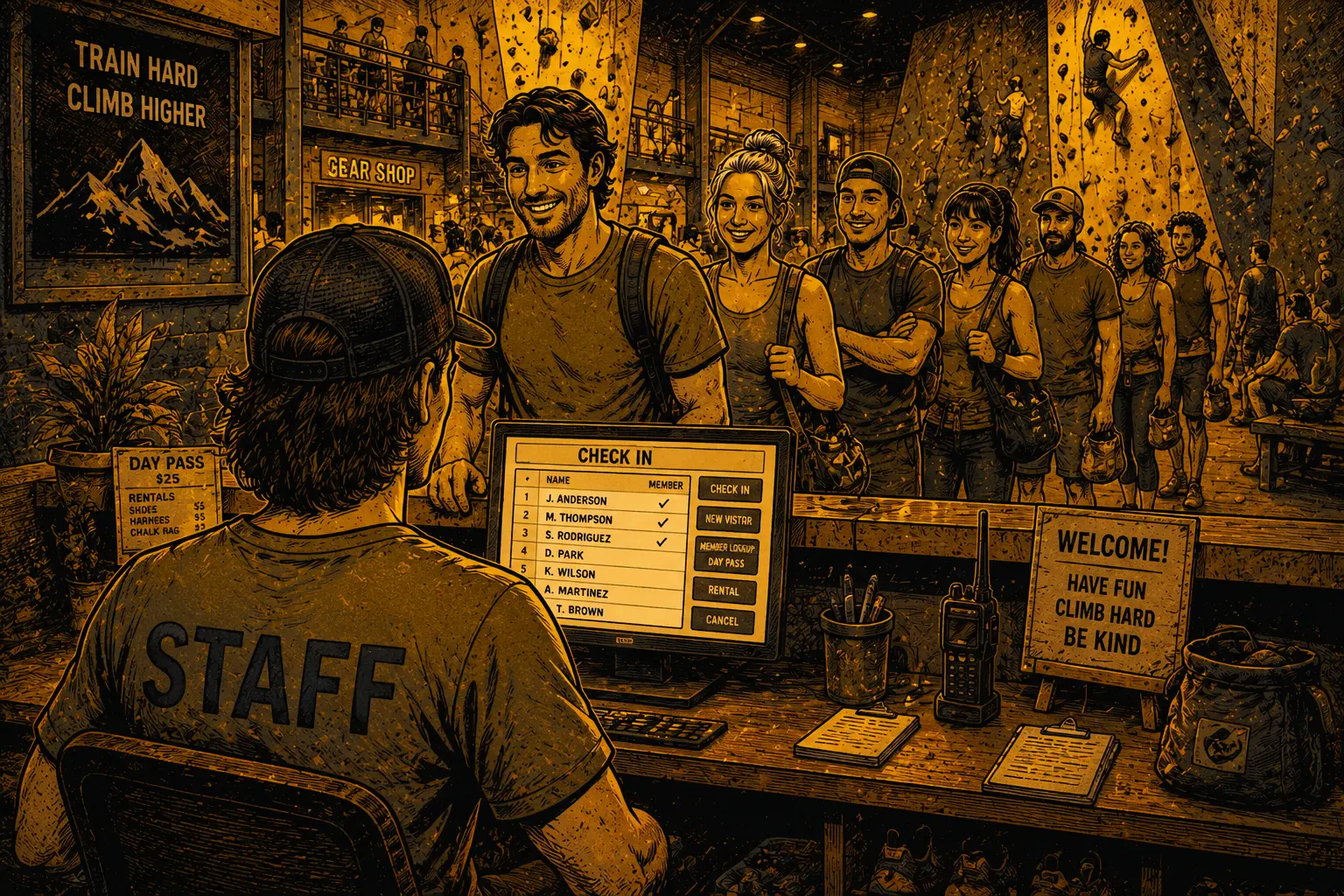
Every vendor we spoke with at the Summit had a capable product. Every gym owner we spoke with was stretched thin.
That tension is the real challenge. Automation platforms require someone to build the journeys. Segmentation tools require someone to define the segments. Integrations require someone to maintain them. And the strategic thinking that connects all of it: knowing which signals matter, which messages to send at which moments in a member’s lifecycle. This requires a depth of focus that’s genuinely hard to maintain when you’re also managing staffing, routesetting schedules, and a front desk.
This isn’t a criticism. It’s an honest description of where the industry is. The technology is ahead of the internal capacity in most gyms to fully deploy it. Which means the gyms that close that gap, whether by building internal expertise or by bringing in a partner who specializes in this work, will operate at a level that others simply can’t match from the tools alone.
The Window Is Open – For Now
The gyms that lead this industry over the next five years won’t necessarily be the biggest. They’ll be the ones that build a genuine, personalized digital relationship with every member, one that reflects who that person is as a climber, meets them at the right moments in their journey, and gives them consistent reasons to stay.
That requires a backbone system chosen with integration-readiness in mind. It requires layering in tools that capture what members actually do at your gym, not just when they show up. It requires an engagement layer that can act on that data across the channels that drive real response. And it requires either the internal capacity to run it, or a partner who lives at that intersection of technology, data, and member relationships.
The ecosystem is being built right now. The window for early movers is open. The question is who’s ready to climb through it.
Patrick Vincler
Subscribe to Crushing the Crux.
✌️ We hate spam too. Unsubscribe anytime. By clicking Submit you agree to our privacy policy.