Gym advertising: where to advertise, what it costs and what the ad should say
- Active Lifestyle Marketing, Google Ads, Meta Ads
- By Grant Guthrie
Gym advertising works best in two places: Google, for people already searching for a gym, and Instagram and Facebook, for people who have not started looking. In the gyms we run ads for, a free trial pass costs five to eight dollars to book. Whether the ads pay comes down to the offer and what you count.
That is the short answer. The rest of this is what we see in real gym accounts, with the numbers.
Where should a gym advertise?
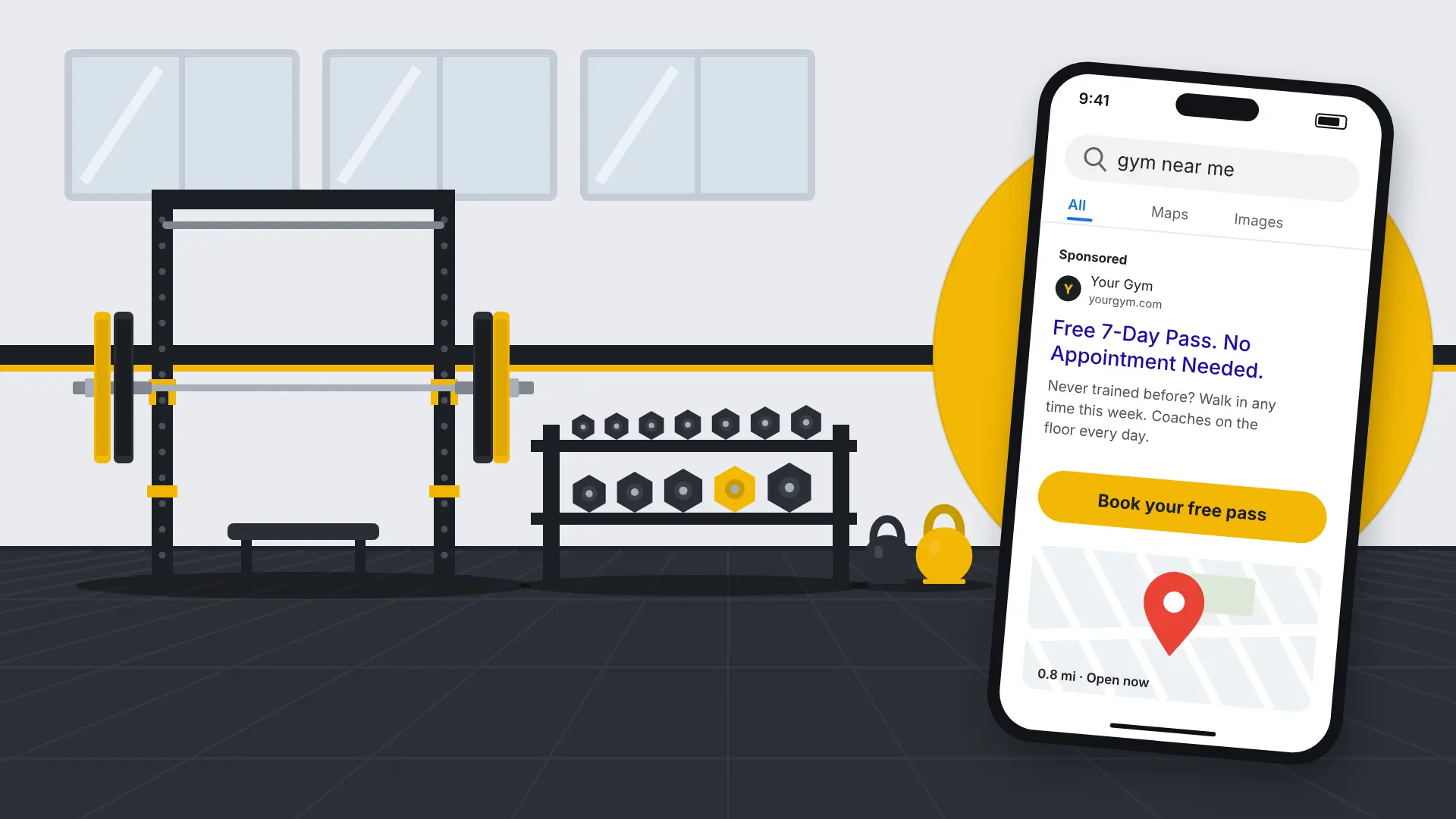
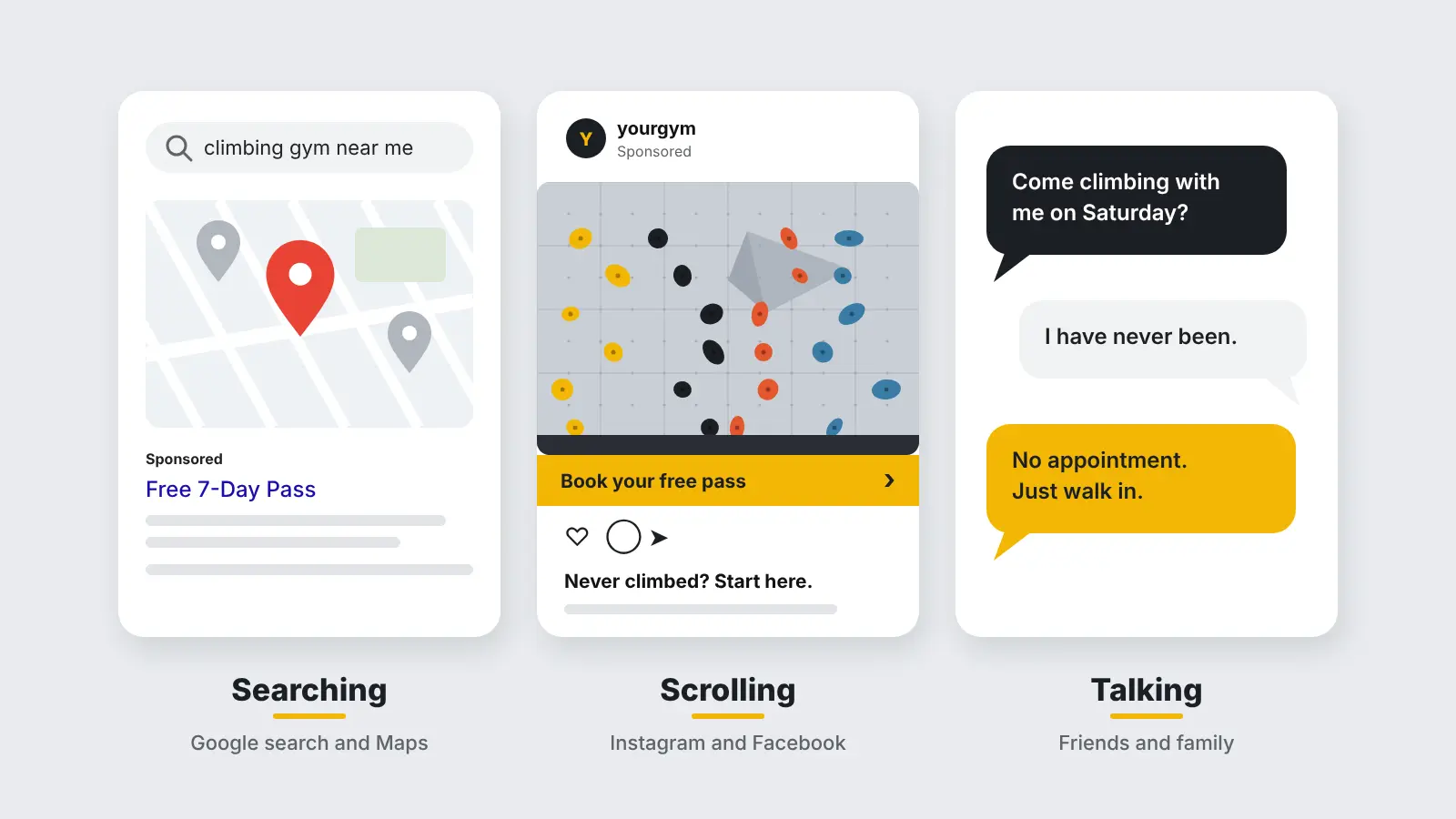
Start where people are already looking. Someone who types “gym near me”, “climbing gym” or “day pass” into Google has decided to go somewhere this week. Your job is to be the first sensible answer. Search ads and your Google Business Profile do that work, and they are the cheapest new visitors you will ever buy.
Instagram and Facebook do a different job. Nobody is searching there. You are interrupting someone who has thought about getting fit, or about trying climbing, and never acted on it. That is slower and needs a better offer, but it reaches the far larger group of people who would never search at all.
Neither replaces word of mouth. At one climbing gym we work with, two thirds of first-time visitors say a friend or family member sent them. Ads add to that. They do not replace it, and a gym with a bad first visit will find that no ad budget is large enough.
Television, radio, flyers and billboards all get searched for. For a single gym or a small group we do not start there, because none of them can tell you which dollar of spend produced which member.
How much does gym advertising cost?
Less per click than most owners expect, and more per member than most owners measure.
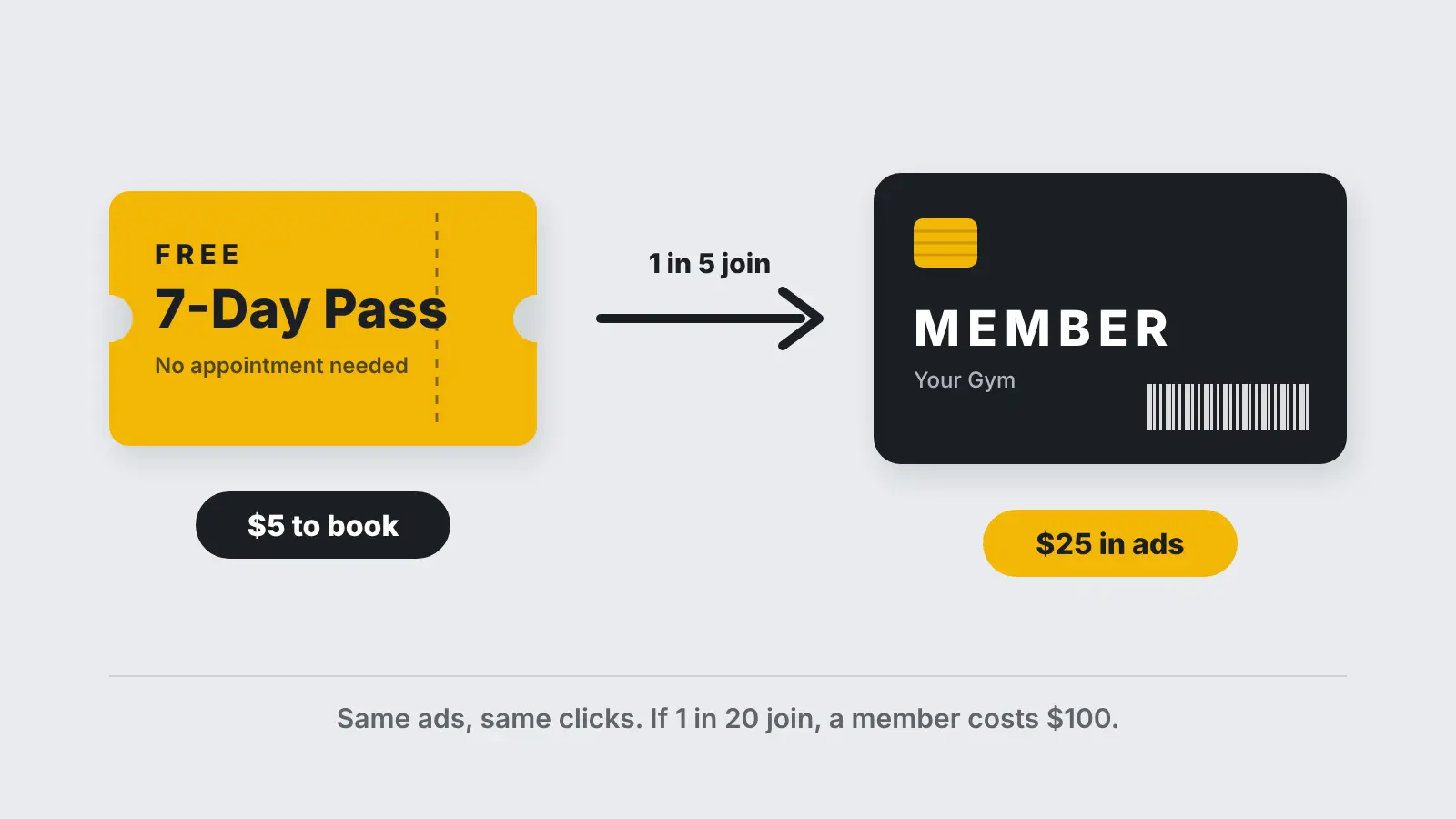
At one location of a climbing gym group we run Google for, a search click costs a little over a dollar. At another location in the same group, Google books a free seven-day pass for about five dollars of ad spend, with every dollar of spend counted. Meta books the same pass for six to eight dollars across the two locations.
That is the number to know. Not the cost of a click or a lead. The cost of a booked first visit.
Then do the second half of the sum. If one in five trial visitors becomes a member, a five-dollar pass means a member costs twenty-five dollars in ads. If one in twenty does, a member costs a hundred. Same ads, same clicks. The difference is the first visit, and no amount of ad spend fixes it.
Set your budget from the other end. Decide how many new members you need a month, multiply by what a member costs you, and that is the budget. Most gyms do it the other way round and then wonder what the money bought.
What should a gym ad say?
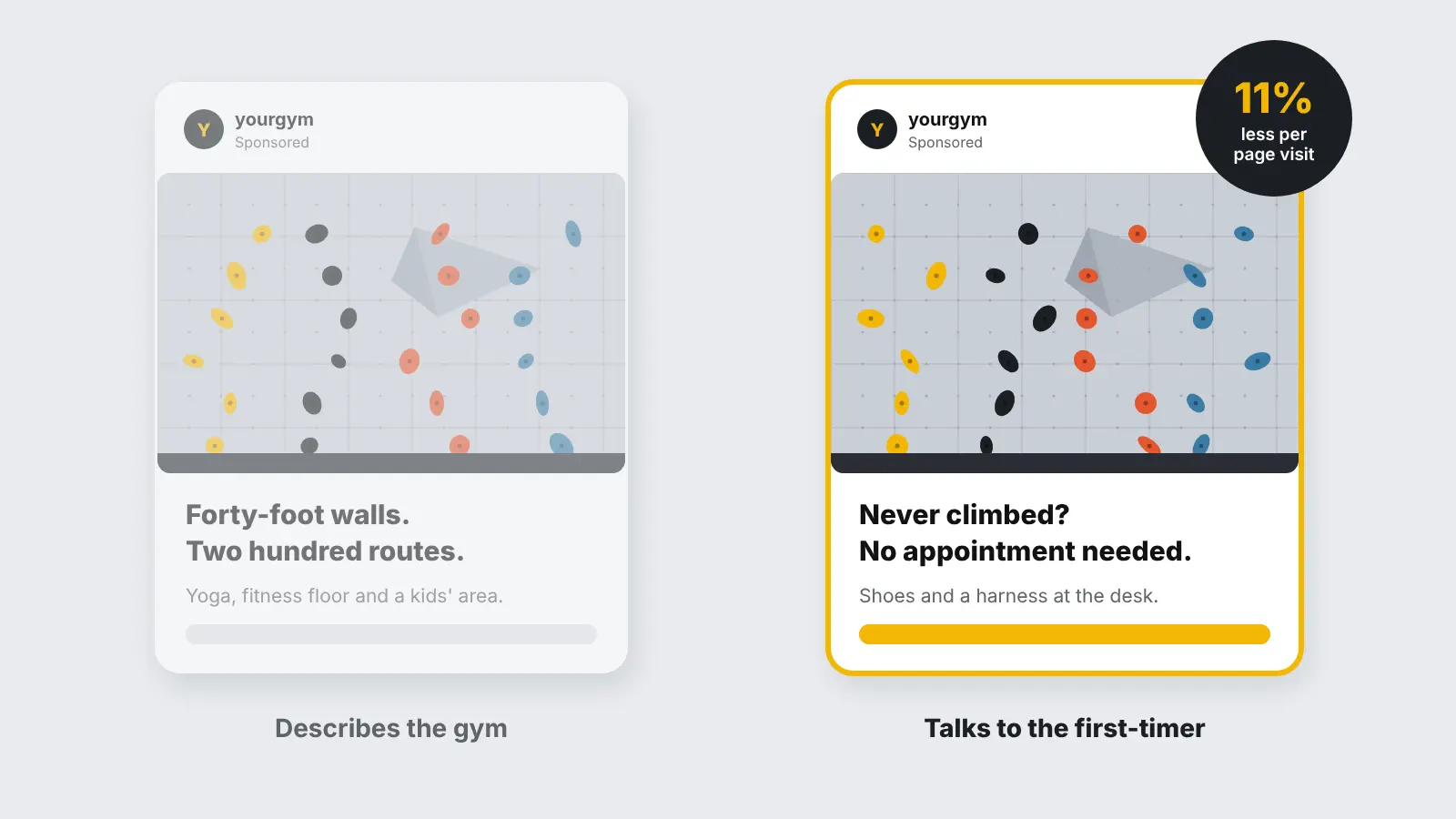
Talk to the person who has never been. Most gym ads describe the gym: the equipment, the walls, the classes. The people you are trying to reach do not know what any of that is like, and they are mostly worried about walking in looking lost.
We tested this for a climbing gym on Meta. One set of ads spoke to people who had never climbed. The other described the gym and its features. Same budget, same audience, two weeks. The beginner ads cost 11% less per visit to the booking page and were clicked more often. Inside the beginner set, Meta put most of the money behind one line: no appointment needed. That is the fear, answered in four words.
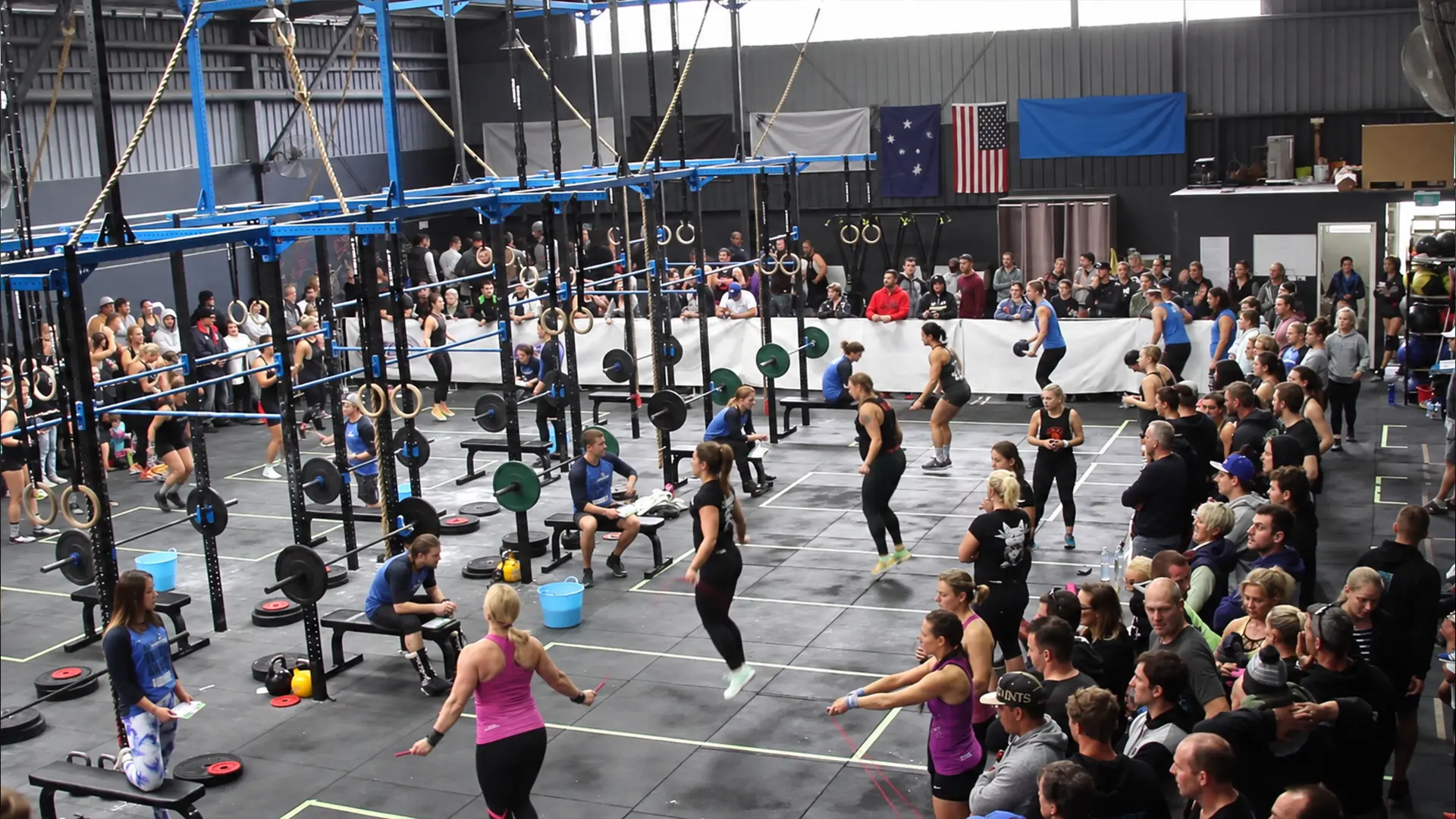
Video of the actual gym beat every still image in the same test. Real members, real walls, the front desk. Stock photos of people with perfect form in a white studio sell nothing, because nobody believes that is your gym.
Give one offer and make it easy. A free seven-day pass or an intro class, one button, one booking form. An ad that asks people to read about memberships, compare plans and then call is asking for three decisions. People make one.
Which gym ads actually turn into members?
The ones that know when a member arrives.
Google and Meta both learn from whatever you report back to them. Report a click, and they find you people who click. Report a booked pass, and they find you people who book passes. Report a purchase, and they find you buyers.
In September, at one location of the climbing gym group, the plain keyword search campaign spent $304 and brought in $518 in tracked value. The campaign beside it, built on the gym’s purchase goals and fed every online purchase, spent $430 and brought in $10,393 in tracked purchases. Same gym, same month. The difference was not the ad copy. It was what the campaign was told to look for.
Across three years and all of that group’s Google campaigns, every dollar of spend has returned about four and a half dollars in tracked purchases. That number exists only because the purchases are counted.
Where should a gym start with advertising?
With one offer, one page and one number.
Pick the offer: a free pass, a first class, a week. Build one page where it can be booked in under a minute on a phone. Make sure that booking reports back to Google and Meta, so you can see the cost of a booked first visit and so the bidding learns from bookings rather than clicks.
Then start with Google, because those people are already looking. Read the search terms report every week and exclude the searches that are not yours. Add Meta once you know what a booked visit costs on Google, so you have something to judge it against.
If you would rather have someone build and read it for you, that is what our gym marketing and advertising service does.
Count booked first visits. Fix the first visit. Then spend more.
Figures in some posts come from Portside client accounts, anonymised. Ask us for the detail on a call.